Written by Amelia Hill, BNutrSc
With gut health being one of the most discussed topics in children’s nutrition at the moment, we decided to have a chat with LittleOak’s resident paediatric nutritionist. Let’s set the record straight on pre and probiotics, what they are, how they differ from each other and why they’re vital for growing children.
What is the makeup of the human gut?
The human gut consists of two components, the physical organs, known as the gastrointestinal tract and the trillions of microorganisms living inside, known as the gut microbiome.
What is the gastrointestinal tract?
The gastrointestinal tract, also known as the GI tract, is our body’s physical digestive system made up of tissues and organs. The GI tract includes the mouth, oesophagus, stomach, small intestine, large intestine and anus. The GI tract has the primary role of digesting food, absorbing nutrients and removing waste, however it needs the gut microbiome to function to its best ability.
What is the gut microbiome?
Also known as gut flora, gut microbiome refers to the community of living microorganisms residing within the GI tract. It is made up of trillions of bacteria, fungi, viruses and archaea (microscopic single-celled organisms). The primary role of the microbiota is to support digestion, immune function and production of beneficial compounds such as short chain fatty acids (SCFAs) which help support the gut barrier and play an important role in immune health. The microbiome cannot function without its home environment of the gastrointestinal tract.
What are prebiotics?
Prebiotics are plant fibres and carbohydrates which are indigestible by the human body. Unlike the carbohydrates you may be familiar with, prebiotics do not break down, nor are they absorbed by the body. Instead, they travel to the large intestine where they act as food for the gut microbiome, fermenting amongst the bacteria, helping them thrive.
If we talk about the gut microbiome as a garden, let’s think about prebiotics as the fertiliser.
What are probiotics?
Probiotics are living microorganisms, often known as “the good bugs” that fight the “bad bugs” living in our GI tract. In fighting these “bad bugs,” the probiotics help our system to absorb nutrients from our food in the most efficient way.
Probiotics can be found naturally in foods such as:
- Yoghurt and kefir (if they specify “live cultures” on the packaging)
- Kimchi, sauerkraut, pickled foods
- Ginger
- Kombucha
- Tempeh
- Sourdough
If we return to the garden analogy above, with the prebiotics as the garden’s fertiliser, the probiotics are the plants, reliant on the fertiliser.
Why are they so important in children’s health?
The first few years of life (sometimes referred to as the “first 1,000 days”) are a critical window for gut microbiome development. Let’s simply break this down.
The concept of the first 1,000 days of life ranges from conception through to a child’s second birthday. It is considered a vital window for a child’s gut microbiome development. This development is influenced by an abundance of factors, including, pregnancy, delivery mode, feeding method, introduction of solid foods and exposure to antibiotics. The microbiota that grows can shape a child’s immunity, metabolism and brain development with disruptions increasing the risk of allergies and asthma.
Ways to support your baby in the first 1,000 days of life
- Eat a varied and nutritious diet through pregnancy (don’t panic if the first trimester is all about survival!)
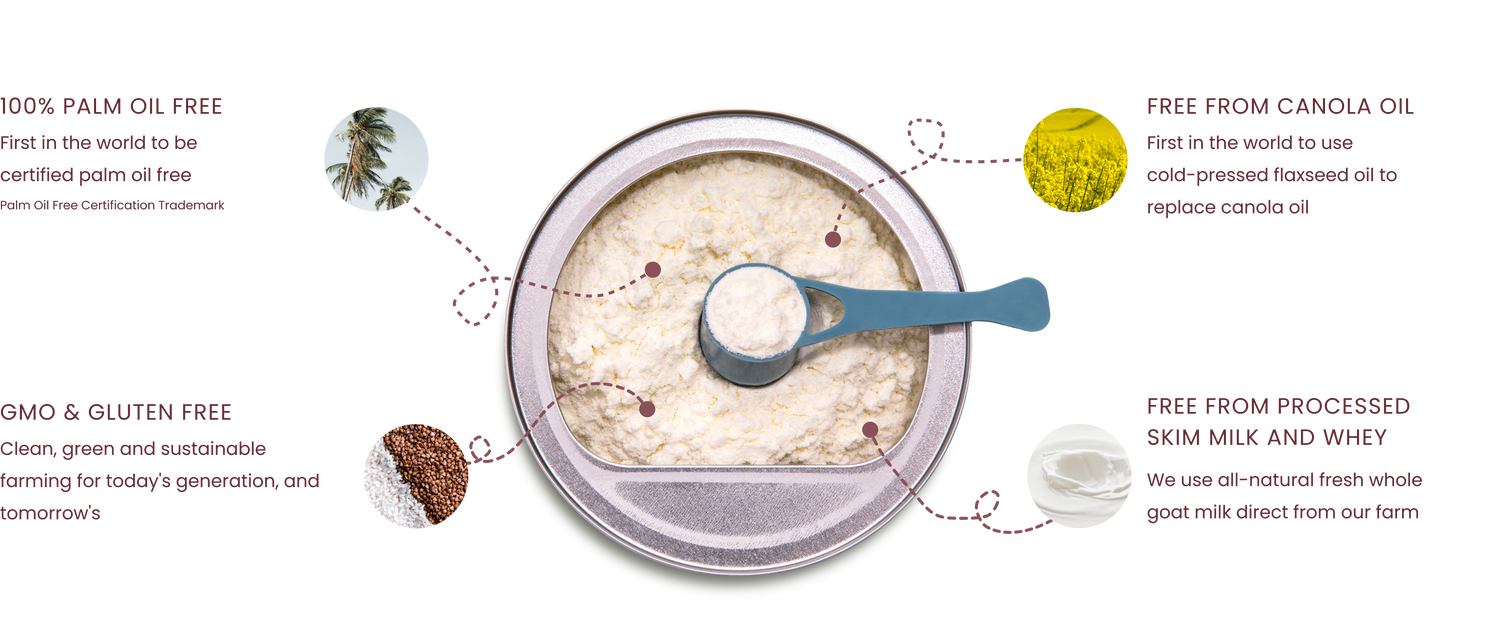
- If breastfeeding isn’t on your radar, select a formula that helps support your baby’s nutritional needs in this crucial period. Goat milk can be a beautiful option for nurturing gut health as it naturally contains oligosaccharides which function as a prebiotic.
- Introduce a variety of nutrient rich foods when starting solids between 4-6 months of age.
- Include natural sources of probiotics such as those foods listed above.
- Encourage outdoor play and interaction with the environment to help expose children to a diverse range of microorganisms.
- Only use antibiotics under guidance of a trusted medical doctor.
- Support baby’s overall health through sleep, physical movement and diet.
Do prebiotics and probiotics work differently in children and adults?
The role of pre and probiotics remains the same throughout a person’s lifespan. The key difference is that a child’s microbiota is still developing in those first 1,000 days of life. Adults have a more developed microbiota and should focus on maintaining good gut health.
Fun facts
- Trillions of microorganisms live in the digestive tract.
- A baby’s gut microbiome begins developing during their birth.
- Human breast milk contains human milk oligosaccharides (HMOs), a type of prebiotic.
- Goat milk naturally contains oligosaccharides, also a prebiotic.
- No two people have the same gut microbiome.
- Gut microbiome is considered one of the most interesting nutritional science topics to research, with new evidence emerging frequently.